

RoboXR
Enhancing industrial training through immersive XR technologies and robotics applications
About the Project
RoboXR is an innovative project that uses Extended Reality (XR) technologies to improve training in robotics and industrial automation. By creating immersive virtual environments, the project allows learners to gain practical experience in operating and managing complex systems in a safe and controlled setting.
Through realistic simulations and interactive learning scenarios, RoboXR helps bridge the gap between theoretical knowledge and hands-on experience. The project supports skill development in areas such as machine tending, human–robot interaction, and industrial processes, making advanced training more accessible, efficient, and cost-effective.
Objectives
RoboXR aims to enhance industrial training by integrating immersive technologies with practical learning approaches in robotics and automation.
Its key objectives are:
- To develop immersive XR training environments for industrial applications
- To support skill development in robotics and machine tending
- To improve understanding of human–robot interaction and safety procedures
- To provide accessible and cost-effective training solutions
- To bridge the gap between theoretical knowledge and real-world industrial practice
Consortium
ECECT
A Cyprus-based non-profit connecting academia and industry through training in emerging technologies and promoting the use of VR in education
voraus.robotik
A German software company specialising in industrial automation, contributing expertise in system integration, simulation, and control technologies
Latest News
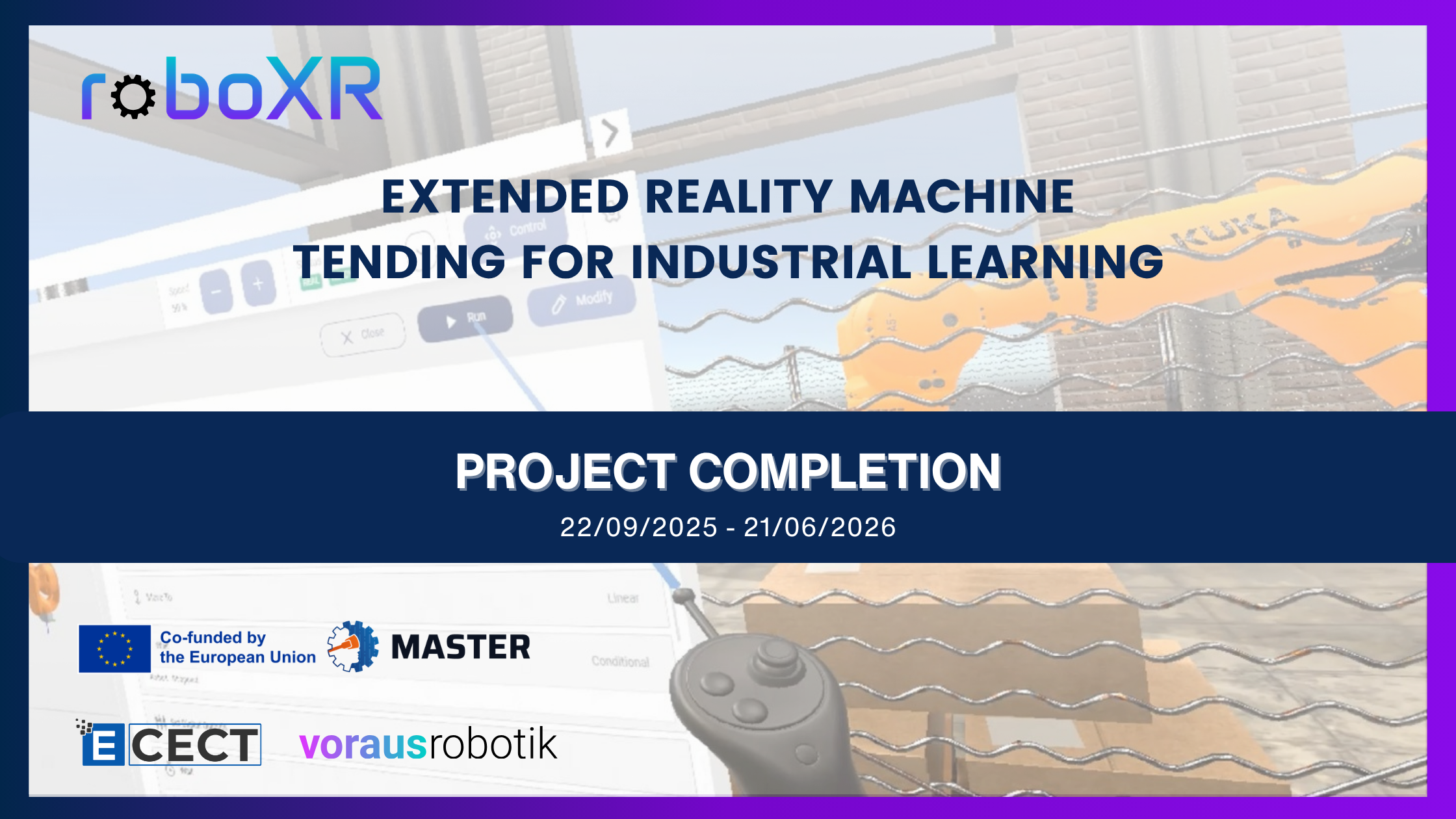
RoboXR – Project Completion RoboXR June 26, 2026 13:21 pm The RoboXR – Extended...
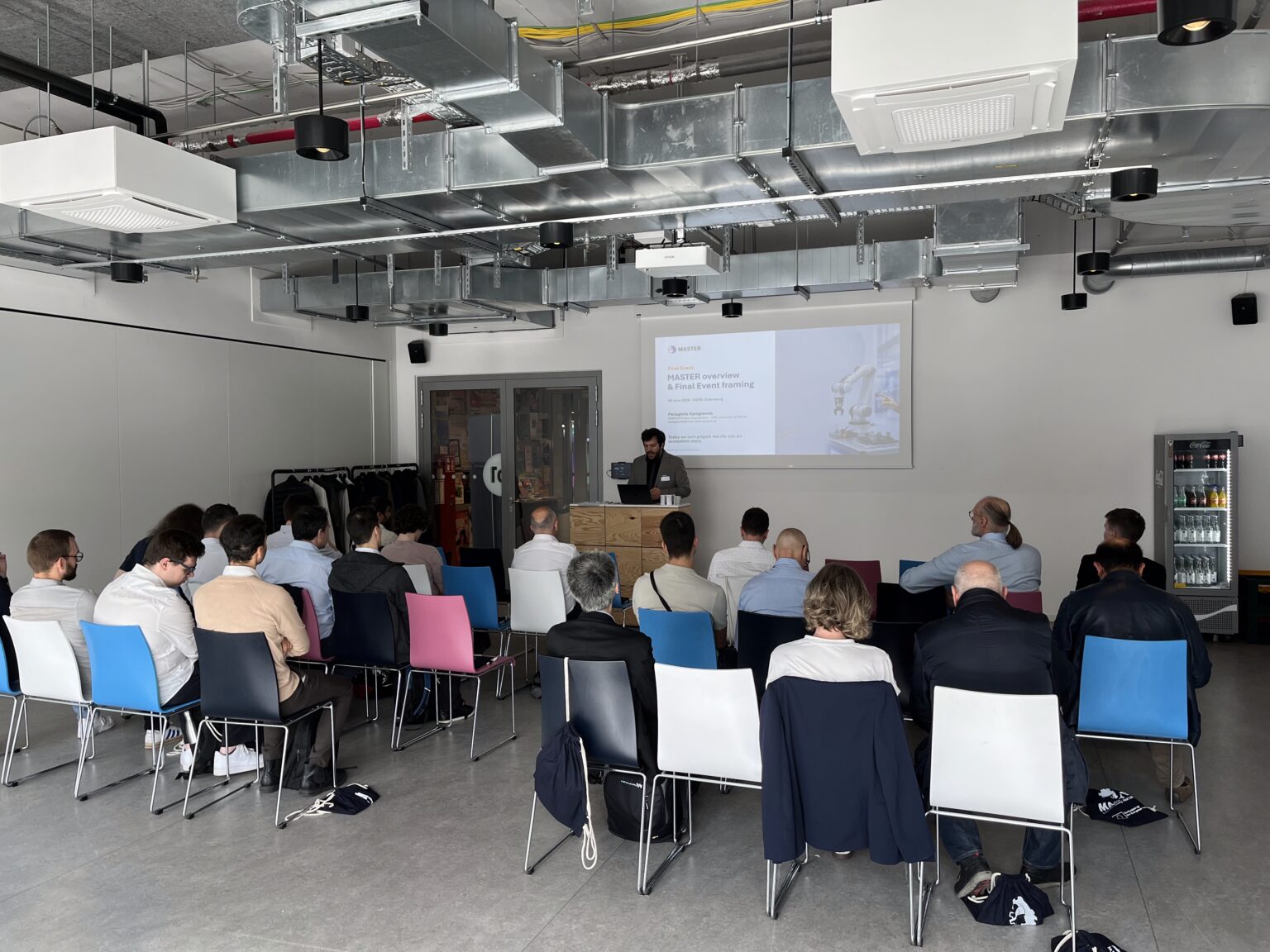
Read More ➜RoboXR Showcased at the MASTER XR Final Event in Oldenburg RoboXR June 18, 2026...
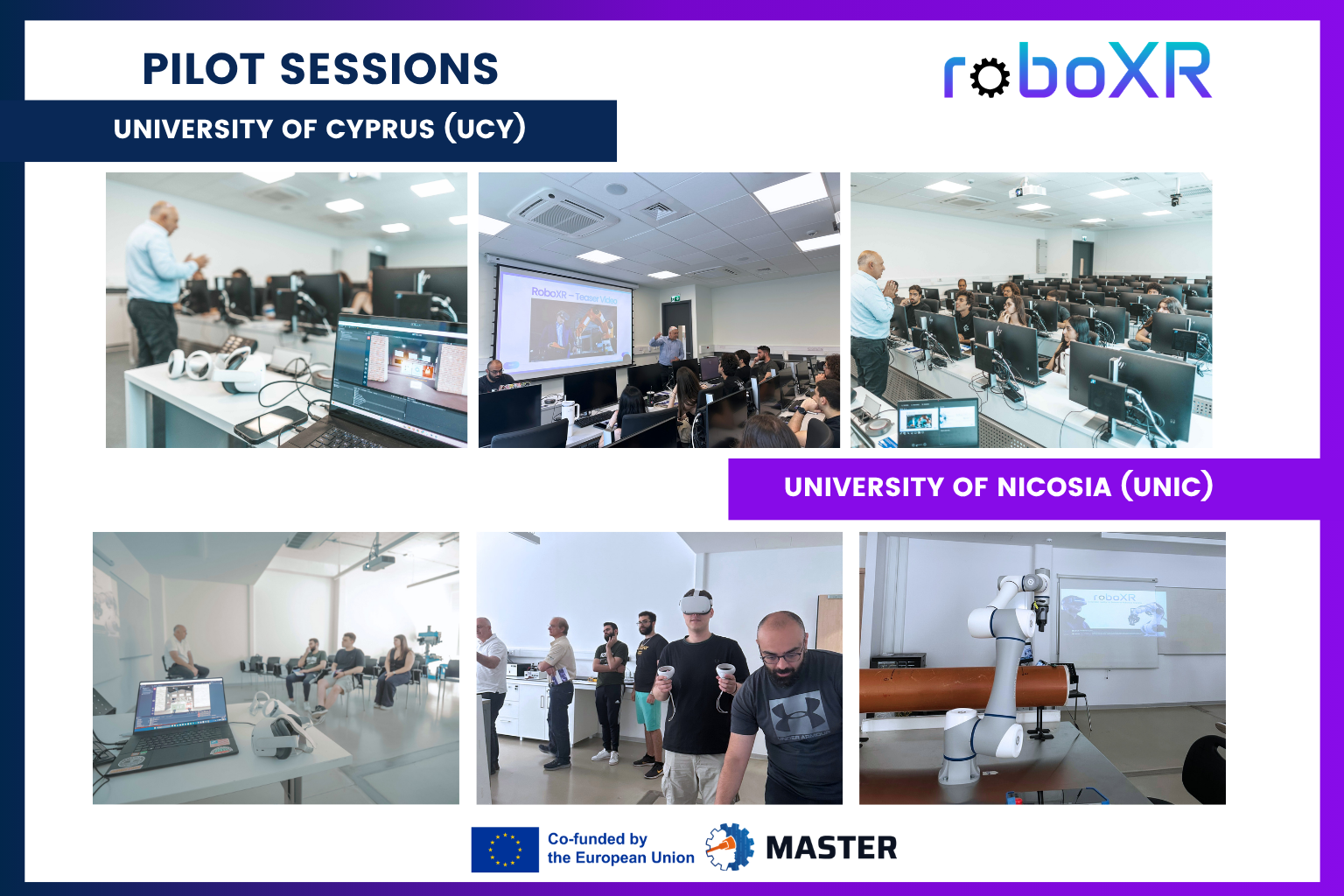
Read More ➜RoboXR Pilot Testing Successfully in Cyprus RoboXR June 18, 2026 16:36 pm The RoboXR...
Read More ➜RoboXR Teaser Video Release RoboXR April 29, 2026 16:11 pm We are excited to...

Read More ➜


The roboXR Project has received funding from the European Union’s Horizon Europe research and innovation action programme, via the Open Call #2 – MASTER issued and executed under project MASTER
Grant Agreement no.: 101093079
Period: 22/09/2025 – 22/06/2026